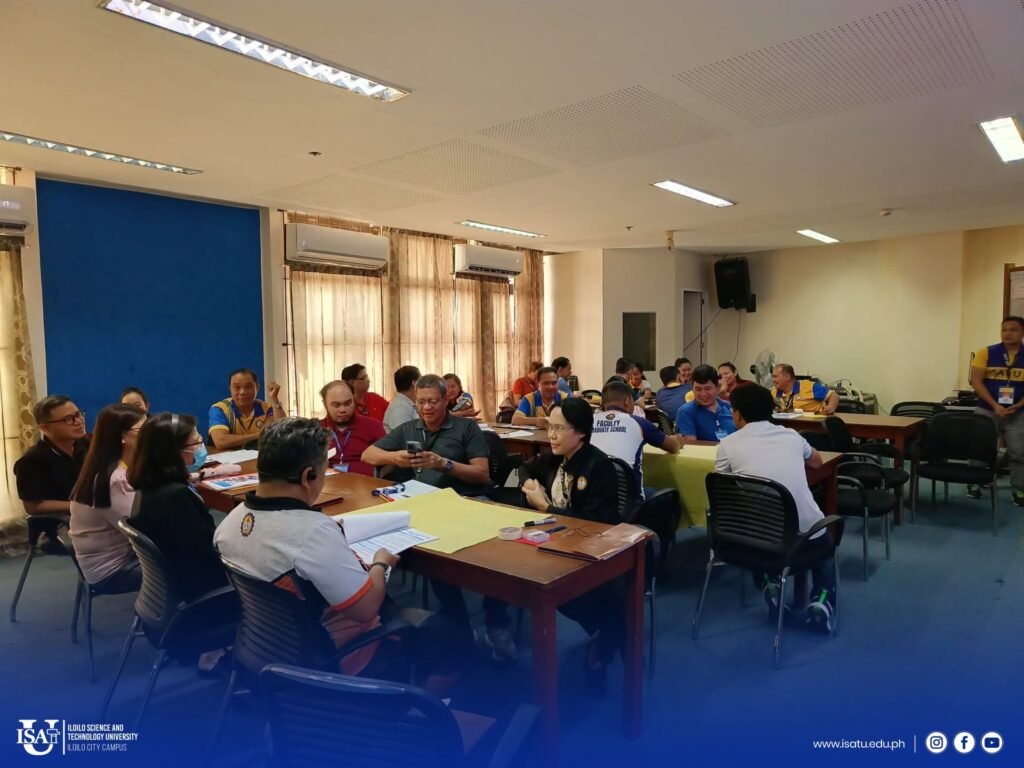
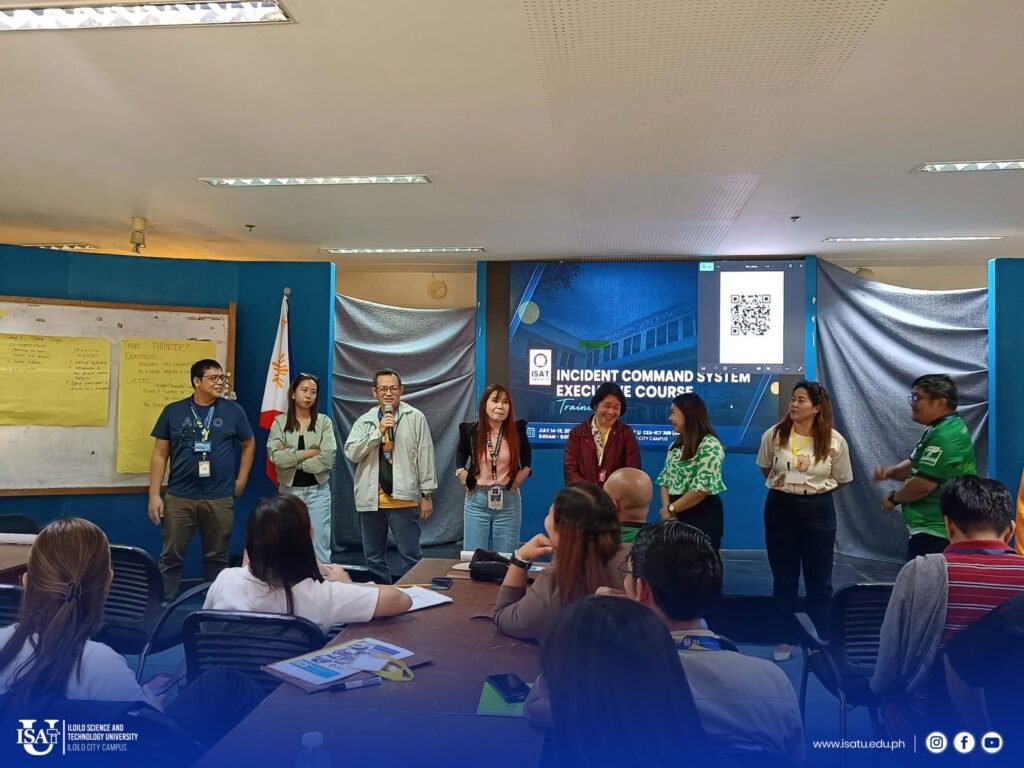
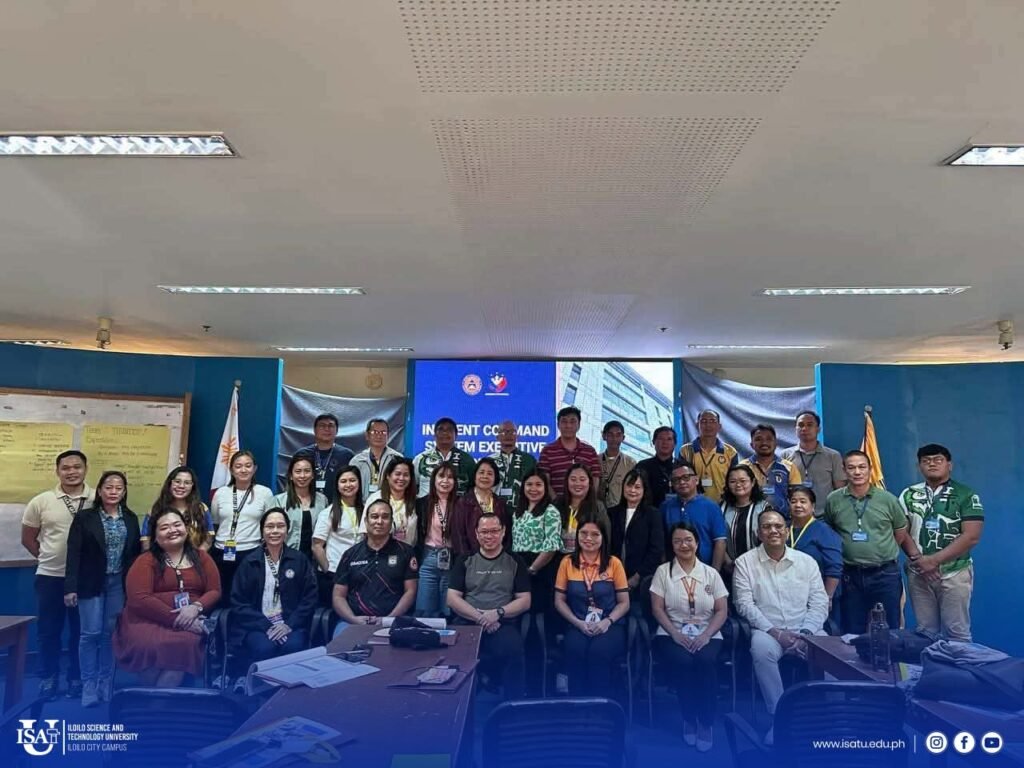
Iloilo Science and Technology University (ISAT U), in partnership with the Office of Civil Defense (OCD) Region VI, conducted the SSEDMMO Fortitude 10: Executive IncidentCommand System (ICS) Training Workshop on July 14–15, 2026, at the CEA-ICT Room 309, ISAT U New Site.
The two-day training gathered selected members of the Administrative Council, personnel from the Safety, Security, Environment, and Disaster Management and Mitigation Office (SSEDMMO), and representatives from the University’s Iloilo City and External Campuses. The training was conducted to strengthen their competencies in crisis leadership, disaster preparedness, incident management, and coordinated emergency response. This also intended to equip University leaders with the knowledge and skills necessary to effectively manage emergencies through the adoption of the Incident Command System (ICS), an internationally recognized framework designed to provide a standardized and coordinated approach to incident management.
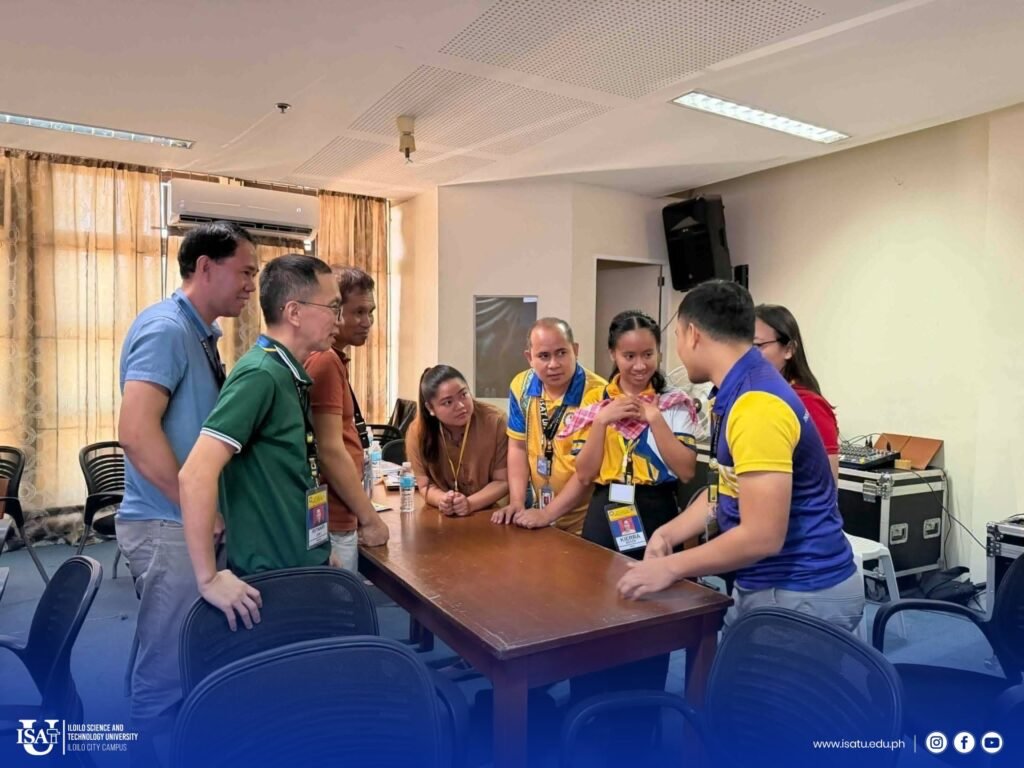
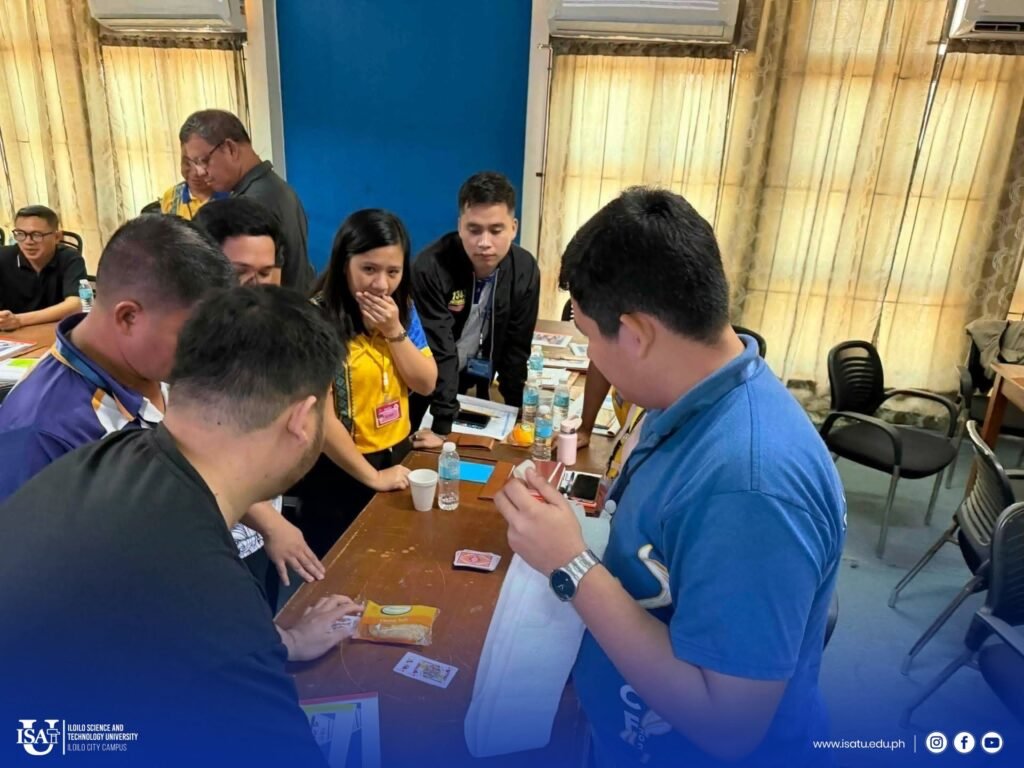
Through lectures, discussions, and practical exercises facilitated by resource persons from the Office of Civil Defense Region VI, participants gained a deeper understanding of the ICS organizational structure, command functions, resource management, communication protocols, and decision-making processes essential for responding to emergencies and disasters.
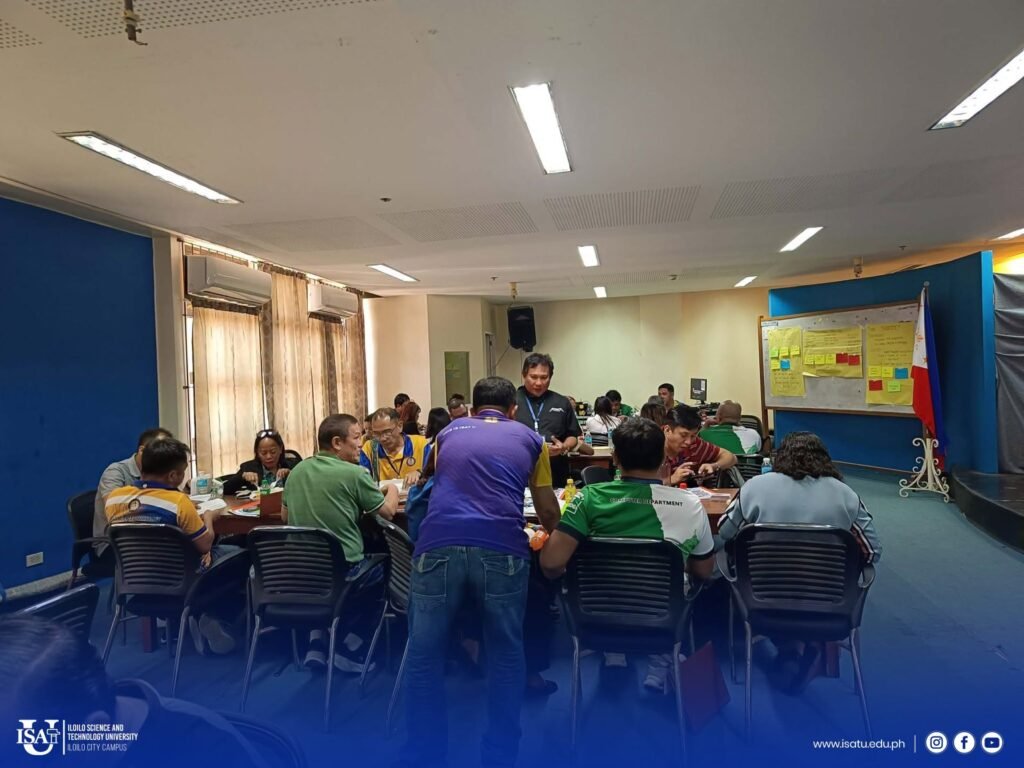
By institutionalizing the Incident Command System, ISAT U seeks to establish a unified command structure across its campuses, strengthen collaboration among leadership and operational units, and ensure timely, organized, and effective responses to emergencies. The initiative also supports the University’s continuing efforts to safeguard the welfare of its students, faculty, staff, and stakeholders by enhancing institutional preparedness and resilience.
The Executive ICS Training Workshop forms part of ISAT U’s comprehensive disaster risk reduction and management initiatives under the SSEDMMO Fortitude 10 program. It underscores the University’s proactive approach to cultivating a culture of safety and preparedness while reinforcing its capacity to respond to natural and human-induced hazards.
Aligned with the principles of the Philippine Disaster Risk Reduction and Management Act of 2010 (Republic Act No. 10121) and the Sendai Framework for Disaster RiskReduction, the training also contributes to the achievement of the United Nations SustainableDevelopment Goal (SDG) 11: Sustainable Cities and Communities and SDG 13: Climate Action.
Through sustained collaboration with partner agencies and continuous capability-building programs, ISAT U reaffirms its commitment to developing a safe, resilient, and disaster-ready academic community capable of responding effectively to emergencies while ensuring the continuity of education and public service.